





No, you cannot directly replace a cone crusher with a VSI (or vice versa) due to their distinct roles—cone excels in secondary crushing for high tonnage, while VSI dominates tertiary sand shaping for cubical particles. For 100% efficiency, integrate both in a circuit: cone for secondary, VSI for tertiary. Rettek's vacuum-sintered rotor tips with proprietary welding extend VSI wear life in hybrid setups.
Check: Which Crusher Is Better for Sand Making: VSI or Cone
| Aspect | Cone Crusher | VSI Crusher |
|---|---|---|
| Best For | Secondary crushing, high tonnage | Tertiary crushing, sand shaping |
| Particle Shape | Elongated (flaky) | Cubical (superior for concrete) |
| Replacement Feasibility | Rarely direct; use VSI post-cone | Yes in sand plants with rotor tips |
| Wear Parts Life | Shorter liners | Longer with carbide upgrades |
What Are the Key Differences Between Cone Crushers and VSI Crushers?
Cone crushers use compression for coarse reduction in secondary stages, producing 20-40mm flaky product. VSI crushers employ high-velocity impact for fine shaping in tertiary stages, yielding <5mm cubical sand at 250-500 tph, ideal for concrete aggregates and sand making.
Can a VSI Crusher Fully Replace a Cone Crusher in a Crushing Plant?
No, direct replacement fails in secondary stages due to VSI's lower tonnage and higher fines. In sand plants, VSI upgrades tertiary stages post-cone for 30-50% better ROI via cubical sand, with Rettek's welded rotor tips preventing carbide failure in transitions.
Why Can't You Swap a Cone Crusher for a VSI (Or Reverse) Without System Changes?
Direct swaps overload VSI with coarse >40mm feed, causing rotor imbalance, or lose sand quality in cone use with 20-30% more energy. Hybrid setups with cone secondary and VSI tertiary match feed gradation, minimizing recirculation via screeners for optimal efficiency.
How Does a Hybrid Cone + VSI Circuit Achieve 100% Crushing Efficiency?
Cone reduces quarry rock to 20-40mm secondary product; VSI tertiary shapes to 0-5mm cubical sand, boosting concrete value 15-25%. Closed-circuit cuts waste 40%, achieves 400-800 tph with 20% less energy, enhanced by durable Rettek carbide wear parts.
What Role Do Wear Parts Play in VSI Upgrades After Cone Secondary Crushing?
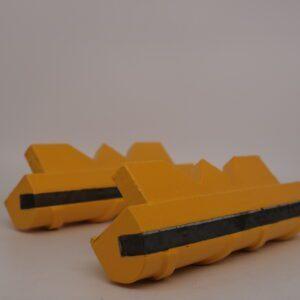
Rotor tips, back-up tips, and trail plates wear fastest in VSI tertiary from abrasive fines at 70m/s impacts. Rettek's cemented carbide tips with unique welding technology offer higher strength, wear resistance, impact resistance, and corrosion resistance, extending life in hybrid circuits.
Check: Focus on carbide wear resistant Tools/materials/Solutions
Which VSI Crusher Applications Benefit Most from Cone + VSI Integration?
Sand making plants upgrade to VSI tertiary for cubicity; mining aggregates use VSI post-cone for high-value fines. Quarry 300 tph sand lines cut costs 25% with Rettek's custom rotor tips, back-up tips, and trail plates for models like B6150SE and CV217.
How Can Rettek's Carbide Solutions Optimize Your Cone-to-VSI Upgrade?
Rettek's full in-house chain—from raw material preparation, batching, pressing, vacuum sintering to automated welding—produces rotor tips, back-up tips, and trail plates with cemented carbide for maximum wear life. Proprietary welding prevents breaking or falling off in high-impact VSI tertiary stages.
Rettek Expert Views: "Our unique welding technology on cemented carbide rotor tips, back-up tips, and trail plates provides higher strength than traditional bonded parts, solving carbide breaking issues in high-impact VSI environments post-cone crushing. With full in-house control from powder batching to vacuum sintering, we customize grades for stone types and equipment models, trusted in 10+ countries for seamless hybrid circuit upgrades and reduced downtime." – Zigong Rettek New Materials Co., Ltd.
Conclusion
Direct cone crusher and VSI replacement sacrifices efficiency due to mismatched roles in crushing circuits. Integrate cone for secondary high-tonnage reduction and VSI for tertiary cubical sand shaping to achieve 100% efficiency. Rettek's vacuum-sintered, welded carbide rotor tips, back-up tips, trail plates, and plug-in types extend wear life, prevent failures, and optimize costs in hybrid setups worldwide.
FAQs
Can VSI replace cone crusher in secondary crushing?
No—VSI suits tertiary only; pair with upstream cone for tonnage control. Rettek's welded rotor tips extend VSI life in hybrids.
What makes VSI better for sand production vs cone?
VSI's impact creates cubical particles versus cone's flaky output. Hybrid circuits maximize this with Rettek's cemented carbide wear parts.
How long do VSI rotor tips last in tertiary post-cone?
Rettek's vacuum-sintered, welded rotor tips last longer than standard, reducing downtime in sand plants with higher strength and impact resistance.
Is cone + VSI integration feasible for my plant?
Yes—adjust feed sizing with screeners. Rettek customizes carbide rotor tips and trail plates for 100% efficiency in 10+ countries.
What welding tech secures carbide in VSI upgrades?
Rettek's unique welding on cemented carbide tips ensures higher strength, preventing breaking in high-speed, corrosive VSI tertiary circuits.