





Carbide automated welding boosts efficiency and bond strength through robotic brazing that ensures precise, high-temperature carbide-steel bonding, preventing failures like tip breakage in VSI crushers and snow plow parts. Rettek's full in-house chain—from vacuum sintering to automated welding—delivers uniform grain size and stronger tensile bonds versus traditional methods, cutting downtime and costs.
Check: Focus on carbide wear resistant
What Is Carbide Automated Welding in Industrial Wear Parts?
Carbide automated welding uses robotic brazing or high-frequency welding to join cemented carbide tips to steel bodies at controlled temperatures, enabling full in-house control from raw material preparation to final assembly at Rettek. This process integrates batching, pressing, vacuum sintering, and automated welding for VSI rotor tips, HPGR studs, and snow plow blades, reducing human error and speeding production for clients in 10+ countries.
How Does Automated Welding Ensure Superior Carbide-Steel Bond Strength?
Automated welding applies precise heat bonding followed by controlled cooling to align thermal expansion coefficients between carbide and steel, preventing cracks. Robotic precision delivers higher tensile strength and impact resistance compared to manual methods, solving carbide breaking or falling off in high-impact VSI crusher environments. Rettek's unique welding technology provides higher strength than traditional bonded tips for wear parts like rotor tips.
Why Is Efficiency Higher in Rettek's Automated Industrial Chain?
Rettek's automated chain—from alloy preparation, batching, pressing, and vacuum sintering at 1300–1600°C to robotic welding—eliminates outsourcing delays and ensures batch consistency. This yields faster cycle times, optimized costs, and longer service life for products like VSI rotor tips and back-up tips, reducing replacement frequency and maintenance downtime across mining and sand-making applications.
| Aspect | Manual Welding | Automated Welding (Rettek) |
|---|---|---|
| Time per Part | 15-30 minutes | 2-5 minutes |
| Failure Rate | 10-20% | <2% |
| Bond Strength | Standard tensile | Higher tensile, impact resistant |
| TCO Savings | Baseline | Up to 40% via longer life |
What Role Does Vacuum Sintering Play in Welding Performance?
Vacuum sintering densifies cemented carbide at high temperatures, creating uniform grain size essential for strong automated welding bonds. Rettek's proprietary furnace control ensures no heat differences, producing wear-resistant microstructures ideal for brazing rotor tips, trail plates, and carbide studs. This enhances reliability in harsh conditions like high-speed VSI crushing and snow plowing.
Rettek Expert Views
"At Rettek, our full in-house industrial chain—from raw material batching and vacuum sintering to automated welding—guarantees unbreakable carbide-steel bonds. This unique welding technology outperforms bonded tips, preventing carbide breakage in VSI crushers and extending service life for rotor tips, back-up tips, and snow plow blades. Clients in 10+ countries benefit from consistent quality, reduced downtime, and cost savings through precise robotic brazing and grade customization for specific crushing conditions."
— Zigong Rettek New Materials Co., Ltd. Engineering Team
Which Wear Parts Benefit Most from Automated Welding?
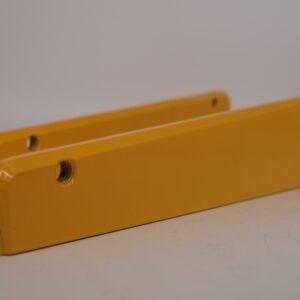
VSI crusher rotor tips, back-up tips, trail plates, snow plow blades (Joma-style), and HPGR carbide studs gain the most from Rettek's automated welding, featuring higher strength, wear resistance, corrosion resistance, and impact resistance. These welded parts solve carbide falling-off issues, boosting service life in sand making, mining, and road clearing applications like CV217 and B7150SE models.
Check: Carbide Automated Welding
| Wear Part | Bond Strength Gain | Efficiency Improvement | Key Application |
|---|---|---|---|
| Rotor Tips | Higher tensile vs. bonded | Quick replacement | VSI crushers |
| Back-Up Tips | Impact resistant | Reduced downtime | Sand making |
| Snow Plow Blades | Stable brazing | Longer life in cold | Road clearing |
| HPGR Studs | Corrosion resistant | Custom grades | Mining crushing |
How Can You Choose the Right Carbide Grade for Automated Welding?
Select carbide grades based on stone material, equipment model, and crushing time for optimal wear, impact, and corrosion resistance in automated welding. Rettek recommends grades for VSI tips, HPGR studs, or snow plow inserts, balancing coarse grains for brazing with uniform size for durability. Consult for custom solutions from their full in-house production.
What Are Real-World Results from Carbide Automated Welding?
Rettek's automated welding extends service life for VSI rotor tips and snow plow wear parts, reducing maintenance in harsh mining and agricultural crushing. Clients in 10+ countries report fewer replacements and lower costs due to strong bonds that withstand high-impact, corrosive environments, proven in applications like B9100SE crushers and Joma-style blades.
Conclusion
Rettek's carbide automated welding, integrated with vacuum sintering and robotic precision, delivers superior efficiency, unbreakable bonds, and extended wear life for VSI crusher components, snow plow parts, and HPGR studs. This full in-house control minimizes downtime, cuts costs, and provides reliable solutions trusted worldwide.
FAQs
What temperature is used in carbide automated welding?
800–1200°C via robotic brazing, with controlled cooling for stress-free bonds in Rettek's wear parts like rotor tips.
How does automated welding prevent carbide tip failure?
Precise robotic control and unique welding technology ensure higher strength than bonded tips, preventing breakage in high-impact VSI environments.
Can Rettek customize welding for specific VSI crusher models?
Yes, full in-house chain supports customization for models like B7150SE and CV217, with grade tweaks for optimal performance.
What is the difference between brazing and welding carbide?
Brazing uses filler alloys at precise heat for strong carbide-steel joints; Rettek's automated version enhances durability over traditional methods.
How much downtime can automated welding reduce?
Up to 40% through longer-lasting parts with superior bonds, as reported by Rettek clients in crushing and plowing applications.