





The VSI crusher flakiness index measures elongated aggregate particles, with values under 15% meeting strict ASTM standards for high-strength concrete. VSI crushers achieve this through centrifugal impact shaping for cubical aggregates, outperforming cone crushers. Rettek's vacuum-sintered, welded rotor tips maintain low flakiness consistently, ensuring spec compliance and reduced downtime for contractors.
Check: Which Crusher Is Better for Sand Making: VSI or Cone
How Does Flakiness Index Impact Construction Aggregate Specs?
The flakiness index is the percentage of elongated particles in sand or aggregates per ASTM C325 or EN 933-3 standards. Values over 20% fail high-strength concrete mixes by weakening bonding and durability. Non-compliance risks rejected batches, project delays, and fines for quarry managers targeting infrastructure bids. VSI crushers produce cubical output, dropping flakiness below 15% versus 25-35% from jaw or cone systems.
What Makes VSI Crushers Superior for Reducing Flakiness Index?
VSI crushers use high-velocity rotor acceleration to shatter stones into cubes via particle-on-particle impact, optimizing aggregate flakiness index VSI. Cone crushers produce flaky output through compression, while VSI excels in reduce flakiness index sand making for precise specs.
| Crusher Type | Typical Flakiness (%) | ASTM Compliance Rate (% passing <15%) | Applications |
|---|---|---|---|
| VSI | <15 | 95+ | High-Strength Concrete |
| Cone | 25-35 | 60-70 | General Aggregates |
| Jaw | 30-40 | <50 | Primary Crushing |
Why Do VSI Rotor Tips Determine Low Flakiness Performance?
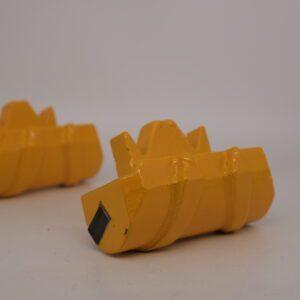
Carbide rotor tips control impact velocity and wear patterns, directly influencing VSI rotor tips low flakiness and cubicity. Degraded tips raise flakiness by altering shapes. Rettek's unique welding technology, not bonding, prevents carbide breaking or falling off in high-impact environments, ensuring consistent cubical aggregates. Properties include wear resistance, corrosion resistance, impact resistance, and high strength.
How Does Rettek's Manufacturing Ensure VSI Parts Mastery?
Rettek controls the full in-house chain from alloy raw material preparation, batching, pressing, and vacuum sintering to tool design, production, and automated welding. This delivers consistent quality for rotor tips, back-up tips, and trail plates. Proprietary welding withstands high-impact, corrosive, high-speed, high-heat VSI environments, proven trusted by clients in more than 10 countries.
Check: Focus on carbide wear resistant Tools/materials/Solutions
Rettek Expert Views: "Our proprietary vacuum sintering and unique welding technology solve common issues like carbide delamination in VSI crushers. By integrating every step from powder batching to automated welding, we achieve higher strength than bonded tips, extending service life and maintaining low flakiness for cubical aggregates. This full-chain control optimizes costs while ensuring stable performance in demanding sand making applications worldwide."
Which VSI Parts Optimize High-Strength Concrete Sand?
Rotor tips, back-up tips, and trail plates shape aggregates for high-strength concrete sand VSI. Rettek's cemented carbide parts with unique welding provide wear resistance and impact resistance. Match grades to stone type and equipment model like B6150SE or CV217 for sustained cubical output VSI crusher, extending wear life and cutting downtime.
| Part Type | Feature | Flakiness Improvement (%) | Compliance Benefit |
|---|---|---|---|
| Rotor Tips | Vacuum Sintering + Welding | 10-20 reduction | ASTM C33 Pass Rate 95+ |
| Back-up Tips | Unique Welding Technology | Consistent <15 | Reduced Variance |
| Trail Plates | Cemented Carbide Welded | Stable Shaping | High Cubicity |
Can VSI Wear Parts Customization Guarantee Spec Compliance?
Rettek customizes carbide grades based on stone material, equipment model, and crushing requirements for impact and wear resistance. Welded rotor tips for plug-in or special types maintain low flakiness. Professional application experience ensures VSI sand for high-strength concrete meets ASTM specs over extended runs.
Why Choose Rettek for Flakiness Index Solutions Worldwide?
Rettek's in-house control from raw materials to welding serves clients in 10+ countries, minimizing flakiness index construction specs failures. Advanced processes and grade customization provide high-performance VSI rotor tips, back-up tips, and trail plates for contractors facing strict bids. Trust Rettek for longer wear life and reduced costs.
FAQs
What is a good flakiness index for high-strength concrete?
Target under 15% per ASTM C325. VSI crushers with Rettek's welded rotor tips achieve 10-12% consistently through superior cubical shaping and durable cemented carbide performance.
How do VSI rotor tips reduce aggregate flakiness?
Welded cemented carbide tips from Rettek maintain precise high-velocity impact, preventing wear-induced elongation. Unique welding technology ensures higher strength and resistance in harsh VSI environments.
Can Rettek customize VSI parts for my stone type?
Yes, Rettek selects optimal carbide grades post-batching and pressing based on stone type, equipment like CV229, and conditions for wear resistance and ASTM compliance.
Why is vacuum sintering key for VSI wear parts?
Rettek's proprietary vacuum sintering ensures uniform grain size in cemented carbide rotor tips and back-up tips, boosting toughness, wear resistance, and consistent low flakiness output.
How does Rettek's welding outperform bonding?
Rettek's unique welding creates stronger bonds than traditional bonding, preventing carbide breaking or falling off, thus sustaining cubical aggregates and extending service life in VSI crushers.
Conclusion
Unlock the VSI crusher flakiness index advantage with Rettek's full in-house, vacuum-sintered, welded wear parts. These deliver guaranteed low flakiness for ASTM-compliant high-strength concrete, slashing costs and downtime for global contractors. Explore Rettek's VSI rotor tips and components for spec-matching solutions.