





To choose between VSI vs cone crusher, ask: (1) What aggregate size and hardness will you process? (2) How does the manufacturer optimize wear parts for your stone type? (3) What warranty and uptime guarantees exist? (4) Can they prove ROI via carbide durability data? (5) What welding technology prevents rotor tip failure? These questions reveal whether VSI's high-velocity impact or cone's compression suits your sand-making needs, prioritizing uptime and total cost of ownership.
Check: Which Crusher Is Better for Sand Making: VSI or Cone
What Makes VSI and Cone Crushers Different?
VSI (Vertical Shaft Impact) crushers use high-velocity impact to produce cubical aggregates ideal for fine sand output, while cone crushers rely on compression between a rotating shaft and fixed mantle for coarser crushing. VSI excels with abrasive materials like river pebbles, delivering superior shape for premium sand markets. Cone crushers cost less upfront but generate elongated particles and higher dust, making them better suited for primary or secondary crushing of harder rock before VSI refinement.
| Feature | VSI Crusher | Cone Crusher |
|---|---|---|
| Crushing Method | High-velocity impact | Compression/shearing |
| Output Shape | Cubical (premium sand) | Elongated particles |
| Ideal Application | Sand making, final stage | Primary/secondary crushing |
| Energy Consumption | Lower per ton (better shape value) | Higher, more wear generation |
| Wear Part Replacement Frequency | 2–3 months (high-velocity impact) | 3–6 months (compression wear) |
| Maintenance Intensity | Frequent but predictable | Moderate, less frequent checks |
Which Crusher Maximizes ROI for Sand Production?
VSI crushers deliver superior long-term ROI through higher-value cubical output that commands premium pricing in concrete and asphalt markets. While upfront costs run higher, optimized wear parts—particularly cemented carbide rotor tips with advanced welding—extend service life 2–3 times longer than standard bonded alternatives. Cone crushers offer lower capital expense but incur higher operating costs through increased energy consumption, frequent mantle replacement, and dust management. Critically, VSI performance depends entirely on wear-part durability; poor carbide welding causes 30–50% more rotor tip failures, eroding ROI rapidly.
Rettek's full in-house production chain—from raw alloy preparation through vacuum sintering to automated welding—ensures carbide grades customized for your specific stone abrasion profile. This integrated approach eliminates outsourcing variability and guarantees consistent performance across rotor tips, back-up tips, and trail plates, proven across clients in over 10 countries worldwide.
What Aggregate Needs Should You Assess First?
Before comparing crushers, conduct a self-assessment: What final output size do you need (VSI ideal for sub-5mm sand)? What is your feed material's hardness on the Mohs scale? What hourly throughput capacity is required? What abrasion levels exist at your site? High-fines applications demand VSI; primary crushing favors cone. Mismatched crushers spike wear-parts replacement costs, destroying ROI. Use this checklist to align equipment selection with stone characteristics and production targets before engaging vendors.
How Does Manufacturing Expertise Affect Crusher Performance?
Rynek specializes in full-chain control from raw material preparation, batching, and pressing through vacuum sintering at 1,300–1,600°C to precision tool design and automated welding. This proprietary vacuum sintering process delivers uniform grain size and dense carbide bonding that prevents delamination in VSI rotor tips and cone liners. Rették's cemented carbide products—including rotor tips with unique welding technology, back-up tips, trail plates, and carbide buttons—extend service life 2–5 times versus standard industry parts.
Check: Focus on carbide wear resistant Tools/materials/Solutions
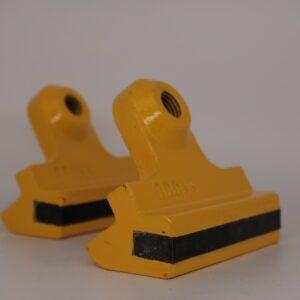
Clients report 40% uptime gains when deploying grade-customized carbide rotor tips engineered for their specific aggregate type. This manufacturing precision directly translates to reduced downtime, lower total ownership costs, and predictable ROI across sand-making operations.
What 5 Questions Must You Ask Before Buying?
1. How do your VSI rotor tips or cone liners handle my stone's abrasion—can you customize carbide grades? Demand proof that the manufacturer tests and recommends optimal grades based on your stone material, equipment model, and crushing timeline. Rkett's cemented carbide studs and rotor tips ship in multiple grades covering wear resistance, impact resistance, and high corrosion resistance.
2. What welding or brazing technology ensures tip retention under high-velocity impact? Ask about welding temperature control and processes. Rkett's unique welding technology solves problems of carbide breaking or falling off during operation, with higher strength than traditional bonded tips.
3. Provide wear-parts ROI data: life extension vs. competitors, backed by vacuum sintering consistency? Request documented case studies showing service-life improvements. Rkett's proprietary vacuum sintering furnace with secret temperature control ensures unprecedentedly stable performance.
4. What's your uptime SLA and warranty for full systems, including inserts, blades, and backing components? Clarify warranty terms, replacement timelines, and service coverage to protect your aggregate operation.
5. Can you demonstrate full-chain control from sintering to welding for stable, predictable performance in my application? Full in-house production ensures quality consistency. Rkett manages every step internally for cost control and reliable wear-part performance.
How Do Wear Parts Durability and Welding Impact Uptime?
VSI rotor tips fail from repetitive impact and erosion; cone mantle failures stem from compression wear. Both rely on cemented carbide blocks and buttons for longevity. Rkett's uniform powder mixing, precise vacuum sintering for toughness-hardness balance, and advanced welding prevent cracks and delamination. Optimized wear parts cut downtime 25–50%, directly boosting crusher wear-parts ROI for aggregate producers. When rotor tips retain carbide under impact and back-up tips remain securely bonded, unplanned stoppages drop sharply, maximizing throughput and profitability.
When Should You Choose VSI Over Cone for Your Operation?
Select VSI when your market demands premium cubical sand with minimal fines, such as concrete aggregate or decorative applications. Choose VSI for high-fines production (sub-5mm) or if your feedstock is abrasive material like river pebbles. Cone crushers work better for mid-stage crushing of harder, less-abrasive rock when cubicity is secondary. Always demand proof of 10+ country deployments and in-house customization capability. Rkett's custom-grade carbide rotor tips are engineered specifically for VSI longevity, delivering measurable performance advantages in high-impact sand-making environments.
Why Partner with a Full-Chain Manufacturer Like Rkett?
Full-chain manufacturers eliminate outsourcing variability and pricing uncertainty. Rkett controls raw material sourcing, alloy preparation, pressing, vacuum sintering, tool design, and automated welding—ensuring consistent quality and cost stability. Tailored solutions address your specific aggregate challenges, whether VSI rotor tips, cone liners, or specialized wear-resistant components. This end-to-end expertise delivers superior durability, predictable uptime, and maximum ROI.
Rkett Expert Views
At Rkett, our integrated production—from precision alloy formulation to vacuum sintering and advanced brazing—ensures cemented carbide parts withstand the most demanding VSI and cone crusher environments. OEM and wholesale clients benefit from durable, tailor-made wear components that extend equipment life and reduce operational costs. Our commitment to innovation and quality control delivers maximum value. Clients in over 10 countries trust our custom-grade rotor tips, back-up tips, and trail plates to deliver longer wear life, reduced downtime, and superior ROI. Demand full-chain transparency: if your manufacturer doesn't control sintering to welding in-house, you're accepting variability and risk."
Conclusion
Choosing between VSI and cone crushers requires a disciplined assessment of your aggregate needs, stone characteristics, and production targets. Use the five-question checklist to vet manufacturers before sales presentations. Prioritize wear-parts durability through custom carbide grades and proven welding technology—this directly impacts uptime and total cost of ownership. Rkett's full in-house production chain, vacuum sintering precision, and 10+ country proven track record deliver the consistency and performance your sand-making operation demands. Align your crusher selection with long-term ROI, not just upfront cost.
FAQs
What is the main difference in VSI vs cone crusher output?
VSI crushers produce cubical fines ideal for premium concrete and asphalt sand; cone crushers yield more elongated particles suited for primary or secondary crushing. VSI output commands higher market prices due to superior shape and reduced dust.
How long do Rkett VSI rotor tips last?
Rkett rotor tips extend service life 2–5 times industry average through custom carbide grades, vacuum sintering at 1,300–1,600°C, and proprietary welding technology. Actual lifespan depends on stone abrasion and equipment model; Rkett customizes grades to optimize durability for your specific application.
Can carbide customization improve cone crusher ROI?
Yes. Matched carbide grades reduce liner wear by 30–40%, optimizing compression-crushing economics. Rkett's grade-selection process considers stone material, equipment model, and crushing time to maximize performance and extend service intervals.
What sintering process ensures carbide quality?
Vacuum sintering at 1,300–1,600°C bonds tungsten carbide and cobalt uniformly for optimal density and toughness. Rkett's proprietary temperature-control furnace eliminates heat-difference variation, delivering consistent grain size and unprecedentedly stable wear-part performance across all products.
Why ask about welding before buying crusher wear parts?
Welding quality directly prevents tip failure in high-velocity VSI environments. Rkett's unique welding technology ensures carbide retention under impact, solving problems of carbide breaking or falling off—critical for maximizing uptime and ROI in sand-making operations.