





Cemented carbide remains the industry standard for crusher wear parts because it balances hardness, toughness, and cost-effectiveness better than ceramic or high-speed steel alternatives. While tungsten prices fluctuate, the true ROI lies in durability: welded carbide tips from advanced manufacturers like Rettek deliver longer service life, offsetting material costs through reduced downtime and fewer replacements.
Check: Tungsten Price Surge in 2025: Implications for Industry and Global Supply
What Makes Cemented Carbide Different from Other Industrial Materials?
Cemented carbide consists of tungsten carbide particles bonded with a cobalt matrix, providing exceptional hardness from tungsten carbide and toughness from cobalt. This combination outperforms ceramics, which are harder but brittle, and high-speed steel, which is tougher but softer, making it ideal for high-impact crusher environments. Rettek's welded construction further enhances strength over traditional bonded tips.
How Is Cemented Carbide Manufactured, and Why Does Production Process Matter?
Cemented carbide production involves raw material preparation, batching, pressing, vacuum sintering, tool design, production, and automated welding. Vacuum sintering at controlled temperatures ensures uniform grain size, preventing oxidation and improving wear resistance, corrosion resistance, and impact resistance. Rettek's full in-house chain guarantees consistent quality and optimized costs for products like VSI rotor tips and HPGR studs.
Why Do Crusher Operators Choose Cemented Carbide Over Ceramic or High-Speed Steel?
Crusher operators select cemented carbide for its balanced wear resistance, corrosion resistance, impact resistance, and high strength in high-impact, corrosive, high-speed, and high-heat environments. Ceramics fracture under impact, while high-speed steel wears rapidly. Welded cemented carbide rotor tips, back-up tips, and trail plates from Rettek solve breakage issues, extending service life in VSI crushers and HPGR applications.
| Material | Hardness (Vickers HV0.1) | Toughness | Cost vs. Cemented Carbide | Best for Crushers? | Typical Service Life |
|---|---|---|---|---|---|
| Cemented Carbide (Tungsten) | 1,500–2,000 | High | Baseline | ✓ Yes—superior ROI | 3–5× longer than alternatives |
| Ceramic Tooling | 2,000+ | Low | 20–30% lower upfront | ✗ No—brittle, prone to fracture | 30–50% shorter; frequent replacements |
| High-Speed Steel (HSS) | 600–900 | Very High | 50–70% lower upfront | ✗ No—poor wear resistance | 10–20% of cemented carbide; rapid blunting |
Cemented carbide dominates due to its balanced properties; Rettek's welded versions excel in VSI crushers, snow plow wear parts, and HPGR studs.
How Do Tungsten Prices Affect Your Total Cost of Ownership?
Tungsten price volatility impacts material costs, but total cost of ownership includes labor, downtime, and replacements. Premium welded cemented carbide tips last longer than bonded alternatives, reducing maintenance frequency. For example, Rettek's rotor tips and back-up tips minimize shutdowns, saving costs despite higher upfront prices through extended service life in demanding crushing applications.
What's the Difference Between Welded and Bonded Carbide Tips, and Why Does It Matter?
Welded carbide tips use Rettek's unique welding technology to braze cemented carbide to the steel body, offering higher strength than bonded tips where carbide can break or fall off. This resists high-impact and thermal cycling in VSI crushers, increasing service life for rotor tips, back-up tips, and trail plates while cutting downtime and replacement costs.
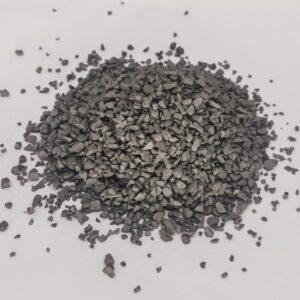
Check: Tungsten/Light Carbide Particles
How Can Customizing Carbide Grades Save Money Without Sacrificing Performance?
Custom carbide grades are selected based on stone type, equipment model, and crushing conditions for optimal wear resistance, impact resistance, and corrosion resistance. Rettek's in-house production enables precise matching for VSI components, HPGR studs, and snow plow inserts, ensuring longer life and lower total costs compared to generic grades that fail prematurely or overperform expensively.
Is Cemented Carbide a Long-Term Investment for Equipment OEMs and Global Supply Chains?
Yes, cemented carbide offers long-term value through durability and supply reliability. Rettek serves clients in over 10 countries with consistent quality from full in-house control, reducing lead times and risks for OEMs. Products like tungsten carbide particles and hardfacing rods extend part life, minimizing waste and supporting predictable maintenance in mining and crushing operations.
Rettek Expert Views
"Our proprietary vacuum sintering with uniform grain size and unique welding technology deliver welded carbide tips that outperform bonded alternatives by preventing breakage in high-impact VSI crushers. Full in-house control from raw materials to automated welding ensures every rotor tip, HPGR stud, and snow plow insert meets performance guarantees, often extending service life significantly while controlling costs."
— Rettek Technical Team, Zigong Rettek New Materials Co., Ltd.
Conclusion
Cemented carbide delivers the best ROI for industrial wear parts despite tungsten price fluctuations, thanks to superior durability from advanced manufacturing. Rettek's integrated production—vacuum sintering, custom grades, and welded tips—provides longer service life for VSI crusher components, HPGR studs, snow plow blades, and hardfacing materials. This reduces downtime and replacements, ensuring cost savings and reliability for global operators. Partner with Rettek for tailored solutions matching your crushing conditions.
Frequently Asked Questions
If tungsten carbide prices are rising, shouldn't we switch to ceramic or HSS to save money?
No, ceramics and HSS fail faster in crushers, needing more frequent replacements that increase total costs. Cemented carbide's balanced properties and Rettek's welded construction offer better longevity, offsetting prices through reduced downtime. Custom grades further optimize usage for your specific conditions.
What's the difference between Rettek's welded carbide and standard bonded tips?
Rettek's welded tips use proprietary brazing for superior joint strength, preventing carbide detachment under impact and heat in VSI crushers. Bonded tips have weaker interfaces prone to failure. This results in longer service life for rotor tips and back-up tips with less maintenance.
How do I choose the right carbide grade for my crusher or HPGR application?
Select based on stone abrasiveness, equipment model, and crushing cycle. Rettek customizes grades via in-house testing for wear, impact, and corrosion resistance, ensuring optimal performance for HPGR studs or VSI parts without over-specifying, which lowers total ownership costs.
Is cemented carbide still worth it if my supplier keeps raising prices?
Yes, focus on manufacturing efficiency over raw material costs. Rettek's full chain controls pricing through in-house production, delivering consistent welded carbide with proven longevity in snow plows and crushers, reducing overall expenses despite market volatility.
How does vacuum sintering improve carbide performance?
Vacuum sintering ensures uniform grain size without oxidation, boosting wear resistance and brazing strength. Rettek's proprietary control produces reliable snow plow inserts and VSI trail plates that withstand extreme conditions, extending life and predictability in field use.