





Cone crushers rely on manganese steel mantles and liners to handle compression forces, while VSI crushers demand carbide rotor tips and back-up tips for high-velocity impact and abrasion. Manganese absorbs slow, heavy crushing; carbide withstands heat and particle acceleration. This material difference extends VSI wear life, reducing downtime—key for cone vs vsi crusher operations.
Check: Vertical Shaft Impact(VSI) Crusher Wear Parts
What Are Cone Crushers and Their Wear Parts Needs?
Cone crushers use gyratory motion for compression-based crushing of hard rock, relying on manganese steel mantles cone crusher and liners for ductility and work-hardening under pressure. Manganese excels with high toughness, absorbing repeated compression without brittle failure, offering 6-18 months lifespan in quarries. Similar to gyratory crusher wear parts, it suits slow, heavy loads.
What Defines VSI Crushers and Why Carbide?
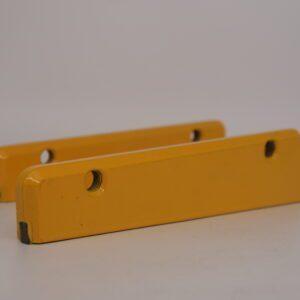
VSI crushers employ centrifugal acceleration for impact and attrition crushing, where key vsi crusher wear parts like carbide rotor tips vsi, back-up tips, and trail plates face extreme heat, abrasion, velocity, and corrosion. Cemented carbide, combining rotor tip body and carbide via Rettek's unique welding technology, provides superior wear resistance, impact resistance, corrosion resistance, and high strength over traditional bonded tips.
| Aspect | Cone Crusher | VSI Crusher |
|---|---|---|
| Primary Force | Compression | Impact + Attrition |
| Typical Wear Parts | Manganese steel mantles, liners (cone crusher wear parts) | Carbide rotor tips, back-up tips (vsi crusher wear parts) |
| Material Logic | Ductile absorption of slow loads | Hardness for high-velocity heat/abrasion |
| Lifespan | 6–18 months | Extended with welded carbide |
| Rettek Edge | Standard liners | Vacuum-sintered, welded tips |
How Do Cone vs VSI Crusher Mechanics Drive Crusher Wear Parts Comparison?
Cone crushers apply slow gyratory compression, suiting ductile manganese steel mantles cone crusher that work-harden under pressure for high-volume ore. VSI crushers hurl particles at high speeds for impact and attrition, demanding cemented carbide carbide rotor tips vsi with properties like wear resistance and impact resistance. Rettek's full in-house chain optimizes grades for stone types in cone vs vsi crusher setups.
Why Manganese for Cone vs. Carbide for VSI—Material Science Explained?
Manganese steel (12-14% Mn, austenitic) offers toughness for cone compression but wears faster in abrasion. Cemented carbide (WC-Co) delivers high hardness for VSI's high-speed impacts, with Rettek's vacuum sintering ensuring uniform grain size and stable performance. Compare to HPGR hpgr carbide studs, which embed carbide for pressure like VSI tips for velocity in why vsi needs carbide parts.
Rettek Expert Views
"VSI crushers operate in high-impact, corrosive, high-speed, and high-heat environments where traditional bonded rotor tips fail by cracking or falling off. Rettek's unique welding technology—integrated with our full in-house chain from raw material preparation, batching, pressing, vacuum sintering, to automated welding—delivers higher strength cemented carbide rotor tips, back-up tips, and trail plates. This solves carbide breakage, increases service life, and saves maintenance costs. Clients in 10+ countries trust our grade customization based on stone material and equipment for unprecedented stability." — Zigong Rettek New Materials Co., Ltd. Engineering Team
What Makes Rettek's Full In-House Chain Ideal for These Parts?
Rettek controls the entire chain: alloy raw material preparation, batching, pressing, vacuum sintering, tool design, production, and automated welding for consistent quality in vsi crusher wear parts. Proprietary processes ensure uniform grain size in carbide rotor tips and hpgr carbide studs, preventing delamination versus bonded failures. Trusted in 10+ countries, it optimizes costs and extends life for high-performance solutions.
How to Choose Wear Parts for Your Cone or VSI Crusher?
Assess stone type, equipment model, and throughput: select manganese steel mantles for cone compression; choose Rettek welded cemented carbide for VSI impact. Mismatched parts like manganese in VSI cause failure. Rettek recommends grades for longest life, drawing from expertise in related abrasion like snow plow carbide inserts. Explore Rettek's full range of carbide solutions for crushing equipment.
What Real-World Results Show in Cone vs VSI Applications?
Rettek's welded carbide rotor tips vsi enable efficient VSI operation by fixing materials in rotors, boosting service life over bonded types. Clients report reduced downtime from quarterly to less frequent changes via proprietary welding that matches thermal needs in high-heat environments. This mirrors extended performance in cone crusher wear parts upgrades, proving tailored alloys cut costs.
Conclusion
Cone vs vsi crusher needs diverge: manganese for compression toughness in mantles and liners, carbide for impact endurance in rotor tips, back-up tips, and trail plates. Rettek's in-house vacuum sintering, unique welding, and grade customization deliver proven solutions trusted in 10+ countries, extending wear life and minimizing downtime. Contact Rettek for a free material audit tailored to your setup, including rotor tips and HPGR studs.
FAQs
Why can't cone crushers use carbide parts?
Carbide's brittleness fails under cone's slow compression; manganese's ductility work-hardens instead, absorbing heavy loads without cracking.
What is vacuum sintering in Rettek's VSI tips?
Rettek's proprietary vacuum sintering furnace with temperature control ensures uniform grain size in cemented carbide, enhancing wear resistance and stability for rotor tips.
How does Rettek welding outperform bonded VSI tips?
Rettek's unique welding technology provides higher strength than bonded tips, preventing carbide breaking or falling off in high-impact VSI environments.
Which lasts longer: cone manganese or VSI carbide?
VSI welded carbide extends service life over traditional parts; cone manganese suits 6-18 months, while Rettek carbide reduces replacements in abrasion-heavy use.
Can Rettek customize for gyratory crushers?
Yes, Rettek's full-chain control and grade selection for wear, impact, and corrosion resistance support hybrid parts like gyratory crusher wear parts.