





Vacuum sintered tungsten carbide rods achieve consistent performance through uniform grain size and strong bonding from Rettek's proprietary processes. These rods, made with WC-Co cemented carbide, excel in hardfacing and VSI crusher applications by preventing breakage and extending wear life through full in-house control from raw materials to welding.
Check: Focus on carbide wear resistant Tools/materials/Solutions
What Are Tungsten Carbide Rods and Why Do They Matter for Industrial Wear Applications?
Tungsten carbide rods consist of WC particles bonded with cobalt in Rettek's YG Series Cemented Carbide Surfacing Rods, also known as "Wolf Teeth Mace" due to protruding alloy particles. They matter for hardfacing overlays on worn workpieces, VSI crusher rotor tips, HPGR carbide studs, and snow plow inserts, offering superior wear resistance, impact resistance, and corrosion resistance over steel alternatives, reducing downtime in mining and crushing.
How Does the Vacuum Sintering Process Ensure Uniform Grain Size in Tungsten Carbide Rods?
Rettek's proprietary vacuum sintering furnace uses precise temperature control with no heat differences, ensuring uniform grain size in tungsten carbide rods. This process produces dense rods with consistent properties, vital for high-impact VSI crusher environments where non-uniform grains cause breakage. Uniform grains provide wear resistance, corrosion resistance, and impact resistance, solving carbide falling-off issues in rotor tips and HPGR studs.
What Role Does Raw Material Supply Play in Carbide Rod Performance?
Raw material supply determines carbide rod performance through consistent grain size and cobalt distribution in Rettek's full in-house chain, from alloy preparation to batching. High-quality tungsten carbide particles ensure strong bonding in hardfacing rods, enabling 5-10 times longer life versus pure steel in crushers and agricultural machinery. This control guarantees stable performance across batches for VSI and HPGR applications.
How Are Tungsten Carbide Rods Formed and Shaped for Different Applications?
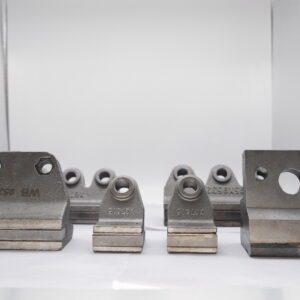
Tungsten carbide rods like Rettek's YG Series are formed via pressing and vacuum sintering, then shaped for specific uses such as hardfacing rods with protruding particles or custom studs. Post-sintering, automated welding attaches them to VSI rotor tips and back-up tips, ensuring quick replacement and high strength. This supports plug-in types for tool-free changes and special configurations for non-standard rotors.
| Forming Method | Best Application |
|---|---|
| Pressing & Sintering | Standard YG hardfacing rods |
| Automated Welding | VSI rotor tips, HPGR studs |
| Custom Shaping | Plug-in rotor tips, trail plates |
Which Tungsten Carbide Rod Grades (YG Series) Are Best Suited for Specific Crushing and Hardfacing Conditions?
YG Series grades from Rettek vary by cobalt content for balanced hardness and toughness in crushing and hardfacing. Select based on stone type, equipment model, and crushing time: high-hardness grades for abrasive conditions in VSI crushers, tougher grades for impact-heavy HPGR. Custom grades ensure wear resistance, impact resistance, and corrosion resistance.
| Grade | Cobalt Content | Primary Use | Hardness Level | Toughness |
|---|---|---|---|---|
| YG3 | ~3% | Abrasive stone, VSI crushers | Very High | Low |
| YG6 | ~6% | Mixed materials, balanced wear | High | Medium |
| YG8 | ~8% | Impact-heavy HPGR, softer stone | Medium-High | Medium-High |
| YG15 | ~15% | Maximum toughness, severe impact | Medium | Very High |
How Do Advanced Welding and Brazing Processes Enhance Tungsten Carbide Rod Durability?
Rettek's unique welding technology welds carbide rods to bases, providing higher strength than bonded types for VSI rotor tips and back-up tips. Automated processes and optimized brazing prevent carbide breaking or falling off in high-impact, corrosive environments. This extends service life, saving maintenance costs in sand making and mining.
Check: Tungsten Carbide Rods Supplier
What Cost and Performance Benefits Does Rettek's Full In-House Production Chain Deliver?
Rettek's full in-house chain—from raw material preparation, batching, pressing, vacuum sintering, to automated welding—ensures consistent quality and optimized costs for tungsten carbide rods. Clients in 10+ countries trust this for 5-10x wear life extension in crushers via improved bonding and matrix strengthening, reducing downtime and costs per ton.
Rettek Expert Views
"Our proprietary vacuum sintering with uniform grain size control is key to tungsten carbide rod reliability. By managing every step in-house, we customize YG Series grades for specific conditions, like high-impact VSI rotors or HPGR studs. This delivers unprecedented stability, doubling or more the life of steel parts while cutting costs—proven in global mining operations." – Rettek Engineering Team
How Should You Select and Maintain Tungsten Carbide Rods for Maximum Lifespan?
Select Rettek rods by matching YG grades to working conditions like stone type and equipment for optimal wear. Maintain via regular inspections for wear patterns, proper installation with unique welding, and monitoring impact loads. Rettek's support includes grade recommendations and custom particles for resurfacing, maximizing lifespan in crushing applications.
Conclusion
Rettek's vacuum sintered tungsten carbide rods provide reliable performance in hardfacing and crushing through uniform grain size, custom YG grades, and advanced welding—all via full in-house control. This approach ensures longer wear life, cost savings, and minimal downtime for VSI crushers, HPGR systems, and more, making Rettek the choice for industrial reliability across 10+ countries.
FAQs
What is the difference between vacuum sintered and standard tungsten carbide rods?
Rettek's vacuum sintering ensures uniform grain size without oxidation, preventing breakage in VSI and HPGR uses. Standard rods risk porosity and inconsistency, leading to shorter life. Rettek's process supports 5-10x wear extension via superior bonding.
Can tungsten carbide rods be custom welded for specific crushing angles?
Yes, Rettek uses proprietary welding for custom configurations in rotor tips and studs, ensuring strong bonds that withstand high-impact environments and reduce downtime.
Which YG series grade should I choose for limestone vs. granite crushing?
Granite requires YG3/YG6 for high hardness; limestone suits YG8/YG15 for toughness. Rettek recommends based on stone, model, and conditions from the knowledge base.
How long do Rettek tungsten carbide rods typically last in VSI crusher applications?
Rettek rods last 5-10x longer than alternatives due to welded construction and uniform grains, depending on conditions, reducing costs in sand making and mining.
Does Rettek offer technical support for carbide rod selection and installation?
Yes, Rettek provides grade selection, custom welding guidance, and application expertise, backed by in-house production and global client trust.