





For hard rock crushing equipment like basalt (highly abrasive), choose cone crushers—they excel in high-impact, abrasion-heavy feeds without rapid wear. Soft rock like limestone suits VSI crushers for superior sand shaping with minimal abrasion. Match geology to crusher type using abrasiveness thresholds, and upgrade with Rettek's welded VSI rotor tips for 2x life in tough ops.
Check: Which Crusher Is Better for Sand Making: VSI or Cone
What Defines Hard Rock vs. Soft Rock in Crushing Applications?
Hard rock like basalt and granite has Mohs hardness 6–8 with high silica content, making it highly abrasive that rapidly wears VSI parts through particle-on-particle grinding. Soft rock like limestone (Mohs 3–5) has low abrasiveness, ideal for VSI shaping. Rettek customizes cemented carbide grades via full in-house chain from raw alloy prep to vacuum sintering for abrasive resistance.
Why Does Highly Abrasive Hard Rock "Eat" VSI Crusher Parts?
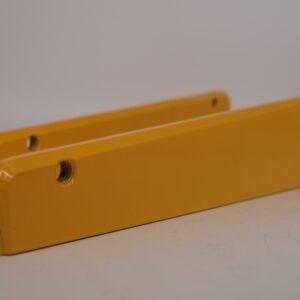
VSI crushers accelerate wear on VSI rotor tips in hard rock like basalt due to high-velocity particle collisions where abrasive silica grinds cemented carbide 3–5x faster. Soft limestone preserves tips for efficient sand making. Rettek's unique welding technology and proprietary vacuum sintering ensure uniform grain size, extending life 2x in high-impact, corrosive environments trusted in 10+ countries.
When Should You Choose Cone Crushers for Hard Rock?
Choose cone crushers for hard rock like basalt when abrasiveness is high—they crush via compression, minimizing rotor exposure and wear compared to VSI. They offer high throughput with consistent reduction ratios, ideal for abrasive rock crushing equipment. Pair with Rettek HPGR carbide studs or cemented carbide blocks for downstream processing in crushing fields.
| Rock Type | Best Crusher | Abrasiveness Impact | Rettek Solution |
|---|---|---|---|
| Hard Rock (basalt) | Cone Crusher | High abrasion destroys VSI tips | Welded VSI rotor tips for upgrades (higher strength via unique welding) |
| Soft Rock (limestone) | VSI Crusher | Low wear enables shaping | Carbide tips for sand making efficiency (wear/impact resistance) |
How Do VSI Crushers Excel in Soft Rock Like Limestone?
VSI crushers shine in soft limestone by using particle-on-particle action for cubical sand aggregates with low energy use and minimal wear on VSI rotor tips. In hard rock, abrasion spikes downtime 50%+. Rettek's cemented carbide rotor tips with unique welding technology provide wear resistance, corrosion resistance, and impact resistance for reliable soft rock sand making.
What Role Does Material Abrasiveness Play in Crusher Selection?
Abrasiveness (silica >70% or high AI >0.3) favors cone crushers for hard rock to avoid VSI wear; low-AI limestone (<0.1) optimizes VSI for shaping. Mismatched selection raises wear costs 30–50%. Rettek tailors carbide grades based on stone material, equipment model, and crushing time via in-house batching, pressing, and vacuum sintering.
Check: Focus on carbide wear resistant Tools/materials/Solutions
Rettek Expert Views
"As Zigong-based pros with full in-house control from raw material preparation to automated welding, Rettek solves abrasive challenges in hard rock crushing. Our unique welding technology on VSI rotor tips, back-up tips, and trail plates delivers higher strength than bonded types, preventing carbide breakage in high-impact VSI environments. Proprietary vacuum sintering ensures uniform grain size for wear, corrosion, and impact resistance—proven to extend service life and cut downtime in 10+ countries' basalt and limestone operations."
Which Wear Parts Optimize Crushers for Abrasive Conditions?
For VSI in abrasive basalt, use Rettek's welded VSI rotor tips, back-up tips, and trail plates with cemented carbide for higher strength and resistance to breaking off. Cemented carbide blocks and buttons suit cone liners. Full in-house production optimizes grades for impact, wear, and corrosion resistance in crushing applications.
| Geology | Recommended Grade | Key Benefit | Rettek Process |
|---|---|---|---|
| Hard/Abrasive (basalt) | Multiple grades for wear/impact | Higher strength, 2x service life | Vacuum sintering + unique welding |
| Soft (limestone) | Balanced for toughness | Efficient shaping, stable performance | In-house batching/pressing |
How Can Rettek's Full-Chain Expertise Solve Your Crusher Challenges?
Rettek's integrated chain—from alloy raw material prep, batching, pressing, vacuum sintering, to tool design and automated welding—ensures consistent quality and cost optimization for VSI crusher components like rotor tips. Custom grades match working conditions, delivering longer wear life and reduced downtime in diverse geologies worldwide.
Conclusion
Select hard rock crushing equipment by abrasiveness: cone crushers endure basalt's grind, while VSI shapes limestone efficiently. Amplify performance with Rettek's vacuum-sintered, welded wear parts like rotor tips and HPGR carbide studs for proven 2x life extension, trusted globally to minimize costs and downtime.
FAQs
What’s the best crusher for basalt?
Cone crushers for primary hard rock reduction; upgrade secondary VSI with Rettek welded rotor tips for higher strength and extended life in abrasive ops.
Can VSI handle hard rock like granite?
VSI struggles with abrasion destroying tips fast; opt for cones or Rettek's cemented carbide tips with unique welding for impact/corrosion resistance.
Why choose VSI for limestone sand making?
Low abrasiveness enables superior cubical sand via particle shaping; Rettek carbide rotor tips ensure wear resistance and efficient performance.
How does abrasiveness affect wear parts?
High silica eats VSI rotors; Rettek's welded cemented carbide parts with uniform grain size resist via higher strength and stability.
What makes Rettek carbide superior for crushers?
Full in-house chain customizes grades for wear/impact resistance, with unique welding preventing breakage—trusted in 10+ countries to cut downtime.